
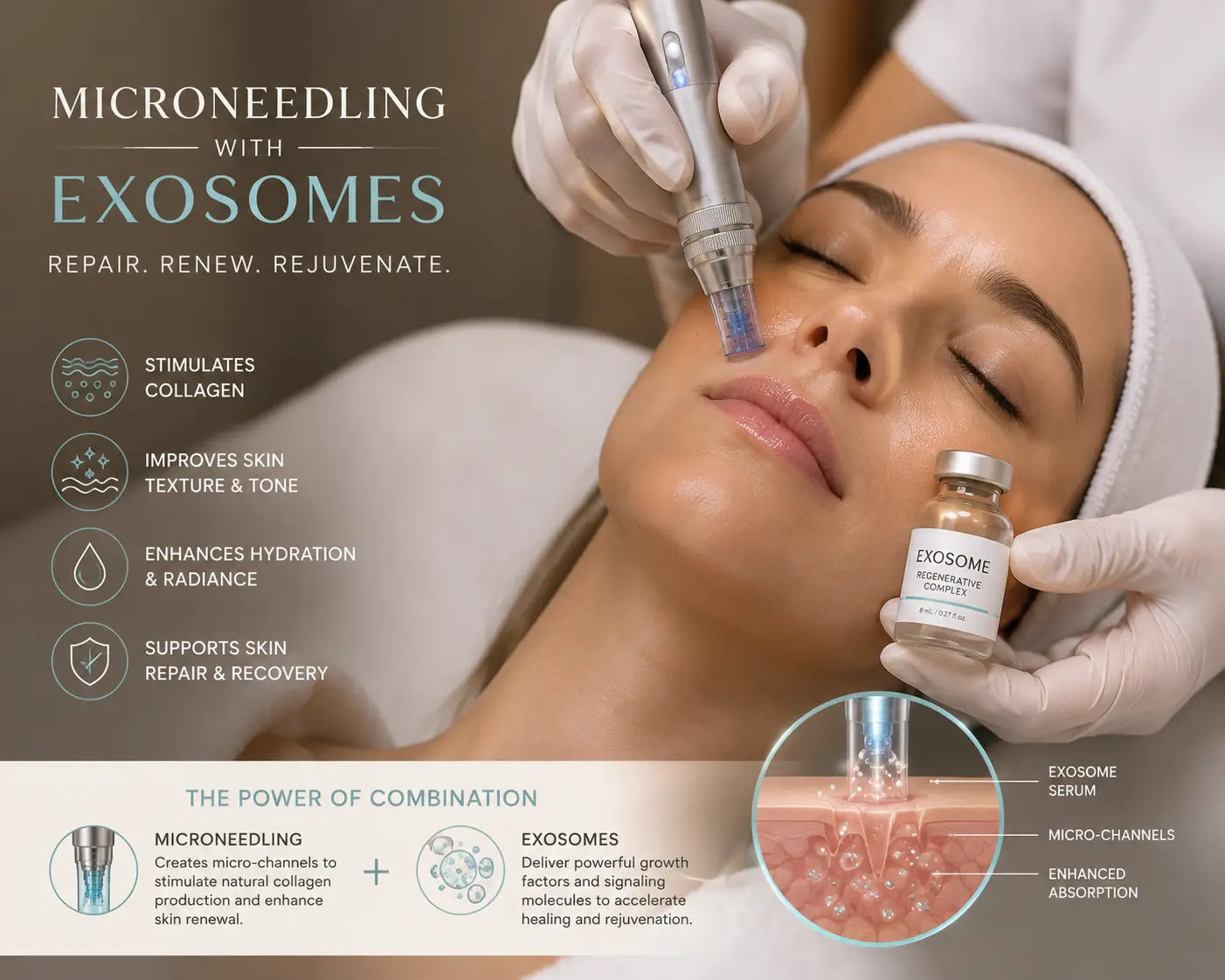
Microneedling creates thousands of microscopic epidermal channels that trigger a controlled wound-healing cascade. When paired with topically applied exosomes—extracellular vesicles carrying millions of growth factors, messenger RNA (mRNA), and anti-inflammatory cytokines—that biological cascade accelerates dramatically.
Patients often experience two distinct timelines: an immediate surface “glow” within days due to rapid cellular calming and hydration, followed by structural tissue remodeling that takes 60 to 90 days to mature.
The Biological Stages: Immediate Healing vs. Collagen Remodeling
Standard microneedling relies entirely on your body’s autologous healing rate. Exosomes act as direct cellular messengers that signal dormant dermal fibroblasts to start synthesizing fresh Type I and Type III collagen and elastin without the prolonged inflammatory downtime.
The Day-by-Day, Month-by-Month 90-Day Timeline
Days 1 to 3: The Rapid Calming Phase
- What you see on the surface: Mild pinkness resembling a light sunburn, slight swelling, and a sensation of skin tightness.
- What is happening biologically: Exosomes deliver anti-inflammatory signals directly into the open micro-channels. Traditional microneedling redness typically lasts 48 to 72 hours; with exosomes, visible erythema often resolves within 12 to 24 hours.
- Patient protocol: Keep the skin clean, avoid makeup for 24 hours, skip strenuous workouts, and apply only the sterile hydrating serums recommended by your clinician.
Days 4 to 14: The “Exosome Glow” & Cellular Turnover
- What you see on the surface: Skin feels soft, refined, and exceptionally hydrated. Light peeling or microscopic flaking may occur around days 4–5 as older keratinocytes shed.
- What is happening biologically: Epidermal barrier function is fully restored. The stratum corneum reorganizes with improved moisture retention. While your complexion looks visibly fresher, this early glow represents surface regeneration, not deep structural collagen.
- Patient protocol: Resume gentle cleansers and daily broad-spectrum physical SPF 30+. Avoid aggressive exfoliating acids (glycolic, salicylic) or prescription retinoids until day 7.
Weeks 3 to 6 (Days 21–45): Fibroblast Proliferation & Early Firming
- What you see on the surface: Subtly firmer skin texture, more uniform pigment distribution, and early softening of shallow fine lines and enlarged pores.
- What is happening biologically: Fibroblasts migrate into the treated dermis and actively secrete Type III collagen (the early structural scaffolding of new tissue) alongside hyaluronic acid within the extracellular matrix.
- Next treatment window: If you are completing a corrective series for acne scarring or deep photoaging, your second session is usually scheduled at the 4-to-6-week mark.
Weeks 8 to 12 (Days 60 to 90): Peak Structural Remodeling
- What you see on the surface: Maximum lifting effect, visible plumping of stubborn dynamic lines, softening of tethered acne scars, and improved dermal bounce.
- What is happening biologically: The immature Type III collagen fibers are replaced and cross-linked into dense, resilient Type I collagen. Dermal thickness and tensile strength increase substantially.
- Longevity: Because this collagen is produced naturally by your own cells, the structural benefits remain stable for 12 to 18 months, maintained through sun protection and consistent skincare.
90-Day Recovery & Transformation Breakdown
| Stage | Visible Changes | Cellular Mechanism | Key Patient Rule |
| Days 1–3 | Mild erythema, warmth, tightness | Rapid anti-inflammatory cytokine signaling | No makeup, active serums, or heavy sweat |
| Days 4–14 | Luminous glow, micro-flaking, smoother tone | Keratinocyte renewal; barrier restoration | Strict mineral SPF; no mechanical picking |
| Weeks 3–6 | Refined pores, early softening of lines | Type III collagen & elastin synthesis | Reintroduce retinoids & active serums |
| Days 60–90 | Peak firming, scar reduction, structural density | Type I collagen cross-linking & matrix remodeling | Assess if maintenance or series session needed |
Factors That Accelerate or Delay Your Results
- Single Session vs. Multi-Treatment Series: A single session creates noticeable brightness and mild tightening. Deep acne scars, loss of elasticity, or severe sun damage generally require a series of 3 sessions spaced 4 to 6 weeks apart for compounding collagen density.
- Needle Depth Settings: Shallow epidermal depths (0.25 mm – 0.5 mm) improve tone, product absorption, and pore size within 2 weeks. Deeper dermal depths (1.0 mm – 2.5 mm) target deep acne scarring and skin laxity, requiring the full 90-day remodeling cycle.
- Daily UV Protection: Ultraviolet radiation activates matrix metalloproteinases (MMPs), enzymes that break down newly formed collagen fibers. Strict daily use of broad-spectrum SPF preserves your neocollagenesis investment.
- Internal Nutritional Support: Collagen synthesis relies on systemic vitamin C, zinc, and amino acids. Staying hydrated and well-nourished directly fuels fibroblast activity throughout the 90 days.
The initial glow after microneedling with exosomes gives you a quick aesthetic lift, but the real clinical value unfolds beneath the surface over 90 days. By giving your fibroblasts the time and signaling they need to rebuild the dermal matrix, exosome-enhanced collagen induction produces durable, natural structural rejuvenation.